Introduction:
Most aspiring founders flaunt their algorithm’s obsessive nature of learning everything about surge pricing and onboarding funnels to make an Uber clone app.
These things matter. But a proven feature, very popular in the taxi app development market, often gets lost due to negligence.
It is the one that was inspired by InDrive’s bidding model. See, bidding is not something like a standard or simple booking. It is basically a toggle and a quite complex one to be honest. But a very important feature indeed.
In markets where passengers have been taken to great lengths of struggle and confusion in fare calculations, bidding turns out to be the most sharpest competitive edge.
Understanding what it does and why it changes ride booking should be at the top of your product strategy talk.
How the Bidding Feature Works Inside a Real Uber Clone App?
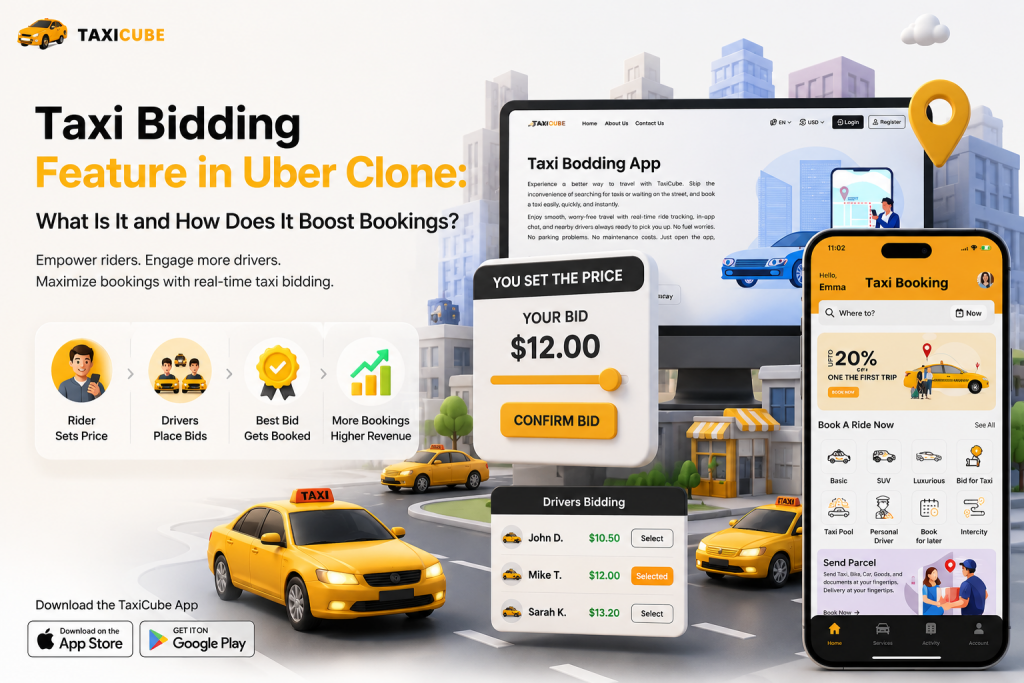
When a passenger posts a ride request, nearby drivers submit their own fares for the trip.
The passenger can then compare each offer along with the driver’s rating and vehicle type before choosing the one that suits them best at that moment.
In simple words, the app allows users to choose the ride fare from multiple offers given by different drivers. This model is clearly inspired by how InDrive changed the traditional driver-passenger system that earlier depended completely on algorithm-based pricing.
This creates a system where customers can pick the price they feel is right instead of being forced to accept one fixed fare decided by the platform. At first, many people assume this kind of bidding system could turn into a race to the bottom where drivers keep lowering prices just to win rides.
That concern is valid.
However, most well-developed Uber clone script platforms already solve this problem by introducing a minimum fare limit inside the bidding system.
Drivers cannot go below that fixed minimum price. What they actually compete on is overall value. For example, a cleaner car, better ratings, or a faster arrival time.
The minimum fare helps protect driver earnings. At the same time, passengers still get the freedom to choose the offer they prefer.
This kind of structure often performs better than aggressive surge pricing models, which usually push passengers away toward competing platforms instead of building long-term loyalty.
What are the Steps for the Users?
Just turning on a bidding feature isn’t enough. The way the booking works needs to be clear, because every step affects whether a user actually completes a booking.
1. Sending the Ride Request
It starts when a passenger enters their pickup and drop-off locations. Sometimes, the user can also set the maximum price they are willing to pay. The app then sends this request to nearby drivers based on where they are located and where the demand is highest.
2. Receiving Driver Offers
Drivers who see the request can send back their own price offers. Instead of the app’s algorithm picking one fixed price, the passenger sees several different offers. Along with the price, they can see the driver’s rating, their car type, and how far away they are.
3. Picking the Best Bid
The passenger has a set amount of time to look at the bids. People choose differently: some want the lowest price, while others want the best-rated driver or the one who can arrive the fastest. The app must never pick a driver for the passenger. If the platform picks automatically, the bidding system becomes pointless.
4. Fixing the Price
Once the passenger picks an offer and confirms it, the price is locked. The driver and the app admin cannot change the fare after this point. This is how you build trust. If you want customers to keep using the app instead of just downloading it once, you have to be consistent with pricing.
5. Ending the Ride and Giving Feedback
After the trip, the passenger and driver rate each other. These ratings matter because drivers with better service and higher scores will have a better chance of winning bids in the future. The app owner can track all of this activity through a central dashboard to see how the business is performing in real-time.
Why Bidding Defines Your Platform’s Market Identity
It is easier to get a sense of the market’s true identity when you are competing for the top position. With a bidding feature, you can easily reposition your brand from being a simple dispatcher to a major marketplace giant.
You will face less friction when you scale since individual drivers will frequently look for demand rather than wait.
So with the help of a white-label firm, embed bidding as one module within a broader feature ecosystem including corporate rides options, intercity taxi options, rental taxi along wth pool/share ride option. You can even offer a schedule-later booking as well with the bidding module.
Your bidding module can also work alongside many advanced AI features, which are made to work with dynamic price surging, risk, and fraud detection. This kind of compilation is difficult to replicate , especially if you are making an app from scratch.
That’s why launching on a proven Uber clone script shortens your time to market from months to only a few weeks.
Final Thoughts
It is much easier to stand out in the market when you give your users real power. With a bidding feature, you move past just being a cheap alternative and give passengers and drivers a reason to choose you. Drivers feel more like business owners, and passengers feel they are getting a fair deal.
So with the help of a white-label firm, you can set up floor prices and in-app chat along with fare confirmation flows. This makes the whole app feel more reliable. You will see a big jump in how often people book and how long drivers stick around. The hard work on the tech side is already finished by the experts. That’s why you should configure your settings and launch now before someone else beats you to it.

Chirag Darji is the CEO of V3Cube, specializing in building on-demand mobile apps and providing mobility solutions for companies around the world. With extensive experience in strategic planning and innovation, he helps entrepreneurs worldwide launch, scale up, and grow successful digital businesses.