A ride-hailing business founder usually thinks more about the dispatch logic and driver commission setup when they are preparing to launch an Uber clone app.
They are not wrong to do so. But the ones who struggle after a few months usually fail because of something very simple: the app was just in one language and accepted only one currency.
See, localization is not just a feature you can bolt on later. In reality, it decides if customers will book the ride or abandon the service effectively right at the registration screen. Dealing with a foreign language and currency creates friction, breaking the trust of the loyal user base way quickly.
Why Every Uber Clone App Needs Localization Setup from Day One
Many different business founders have their own ideas and naturally assume they can launch the app in English first, test the market, and translate it later.
This is actually a big trap. Here is what usually happens.
A founder launches their ready-made taxi app in a new city (say, somewhere in Egypt or Indonesia). The ride booking works fine. Drivers get the requests and fares are calculated.
But, the app interface is in English, the price shows in USD, and the payment section does not support local banks.
If the app presents this kind of friction, less customers will book the ride again due to bad experiences, and drivers won’t take the earnings section in the app that seriously.
Within a few weeks, the startup has a working app but no real business. The app didn’t fail, the lack of language and currency setup did.
Buying a ready-made taxi app helps startup founders solve this without much friction. These apps allow founders to easily add multi-languages, set up local currencies, and connect local SMS gateways right from the admin panel (mostly without touching any code). This is a perfect way to start a business as it lets you handle the commercial side way quickly without waiting on developers.
But here is something that demands great attention. Having all these options in the admin panel won’t help if the app’s solid structure is missing.
For instance, a founder might set Arabic as the main language, only to see the right-to-left (RTL) design break the app layout or the fare screen. You need a setup that already understands how to display different languages perfectly.
So, the real goal isn’t just getting an admin panel with language settings. You need to choose a ready-made app that already has this localization formula to succeed, and then just configure it for your local ride-hailing business.
What Operators Actually Need to Configure
Getting a reliable Uber clone app handles the basic foundation. But what the founder sets up on top of it decides if a local ride-hailing business scales higher or loses customers.
Here are a few things that experienced startup founders usually set up before the first ride of the newly launched business occurs.
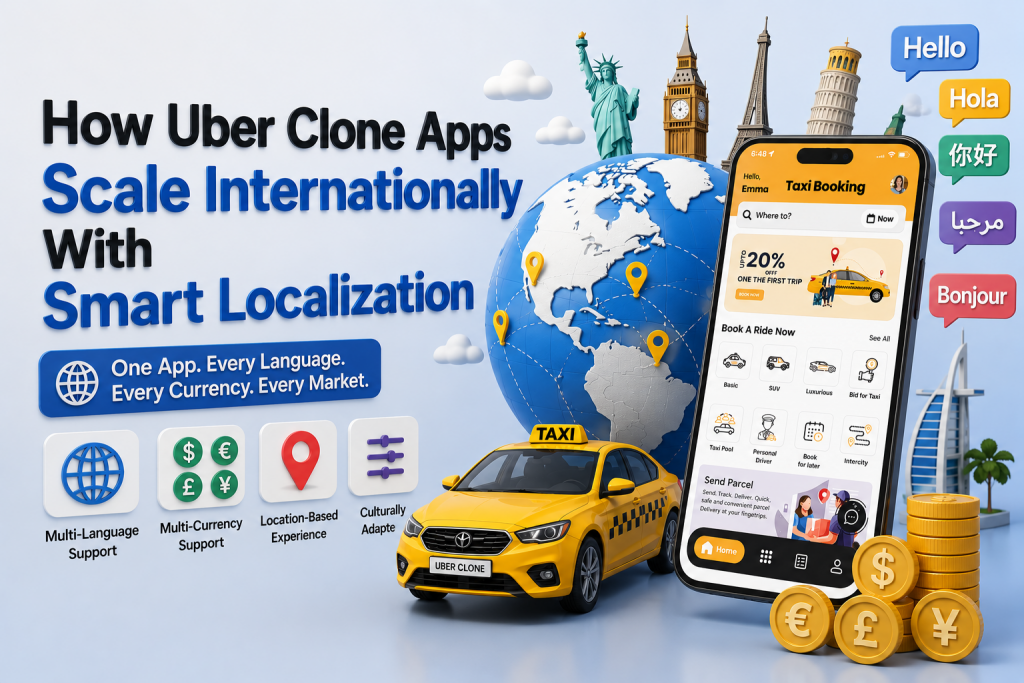
Setting up languages with RTL design
Adding a new language is the easy part. But making sure right-to-left languages (like Arabic or Urdu) look good on every screen of the app is something many founders don’t take seriously. See, both steps need to happen together.
Setting up the currency and fare details
Currency isn’t just about the symbol on the screen. Startup founders need to set the local currency, make sure the distance and time rates calculate properly, and transparently process the drivers by showing their earnings in their own local money, not the company’s base currency.
Connecting local payment gateways
Customers in different new cities prefer their own payment methods i.e. local e-wallets instead of standard card payments. A founder needs to understand what the loyal user base naturally uses and make sure the ready-made app supports those local payment gateways effectively.
Setting up local SMS notifications
If a user doesn’t get the OTP (one-time password) on their local phone network, they will abandon the service effectively before even booking a ride. So, you have to connect local SMS providers way quickly rather than using a single global one that might fail.
Localization as a Solid Market Entry Setup
Drivers who see their earnings clearly in their own currency naturally take the app more seriously. Riders who use the app in their native language book the ride way quickly. Both of these help the rapid deployment scale higher and higher.
Many brilliant startups have successfully entered diverse markets precisely because a ready-made taxi app gives them the solid structure to adapt without needing constant custom development for every new city.
See, reputable app providers have already solved the heavy lifting in the backend. That is exactly what startup founders pay for. The admin panel just makes managing it all way easier.
Final Thoughts
At the end of the day, multi-language and multi-currency setup isn’t just an afterthought. It is a core requirement when you are preparing to launch an Uber clone app in new cities.
Founders who don’t take localization seriously and leave it for later might find that less customers will book the ride again due to bad experiences.
The tools and solid structures are already there in ready-made apps. It all depends on the founder’s mindset i.e. whether they want to build a reliable app for the local customer right from the start, or just assume the app will naturally sell itself. The local ride-hailing business has the formula to succeed only if you transparently process these details early on.

Chirag Darji is the CEO of V3Cube, specializing in building on-demand mobile apps and providing mobility solutions for companies around the world. With extensive experience in strategic planning and innovation, he helps entrepreneurs worldwide launch, scale up, and grow successful digital businesses.