The Philippines is a country of islands, raising the obvious query about the benefits of developing an Uber Clone taxi app for the Philippines. It is true that managing transport in a country with more than 7000 islands is a logistical nightmare.
However, the country’s geography also creates a major ‘last-mile connectivity gap.’. The Philippines is also not immune to the unrest in the Middle East, which is skyrocketing the fuel costs.
These issues alone should justify investing in the development of a taxi app like Uber.
However, there are several benefits of developing a taxi booking app in the Philippines. This article sheds light on the benefits of developing an Uber Clone app in the Philippines.
Why the Philippines for a Taxi App Like Uber?
This section elaborates further on some of the other reasons why businesses should invest in a taxi app.This is also driven by strong market growth and favorable business conditions.
Here are the top reasons why:
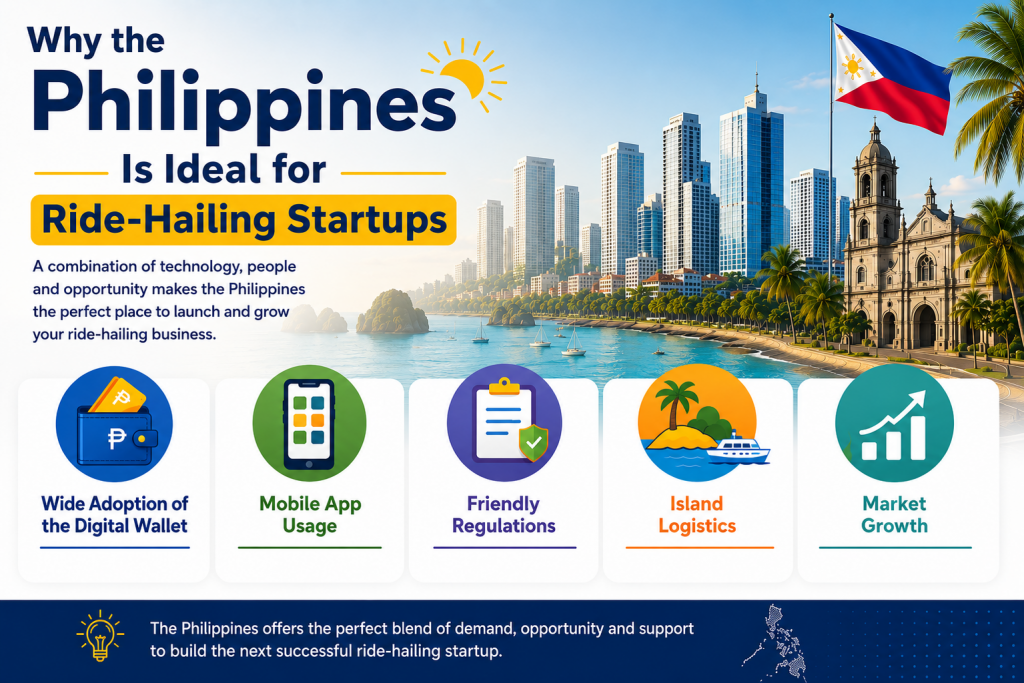
- Wide Adoption of the Digital Wallet: The payment method is no longer a hindrance here. ‘Cash’ is no longer the favorite method of transactions, with over 57% of retail transactions now digital.
- Mobile App Usage: The smartphone is already the most preferred method for accessing several services like taxi, courier, ordering food and several other on-demand services.
- Friendly Regulations: The government regulations are easing up as they start to promote a digital-first approach.
- Island Logistics: There is a market gap since, unlike Manila, other cities do not have a robust localized platform.
- Market Growth: The value of the ride-hailing industry in 2025 was USD 1.2 billion.
Strategic Benefits of Developing an Uber Clone
A taxi app like Uber is ideal for a market like the Philippines. However, to dominate the market, businesses are better off launching their taxi app as soon as possible. A successful strategy also requires fast execution, especially in the Southeast Asia market.
The previous section was a good insight into how the Philippine market is well-suited for new taxi app businesses. The sections go a step further to provide the strategic benefits of developing a taxi app like Uber.
The smart approach would be to develop a white-label solution since this not only reduces time to launch, but also drastically reduces the cost.
The strategic benefits of developing an Uber clone in the Philippines include:
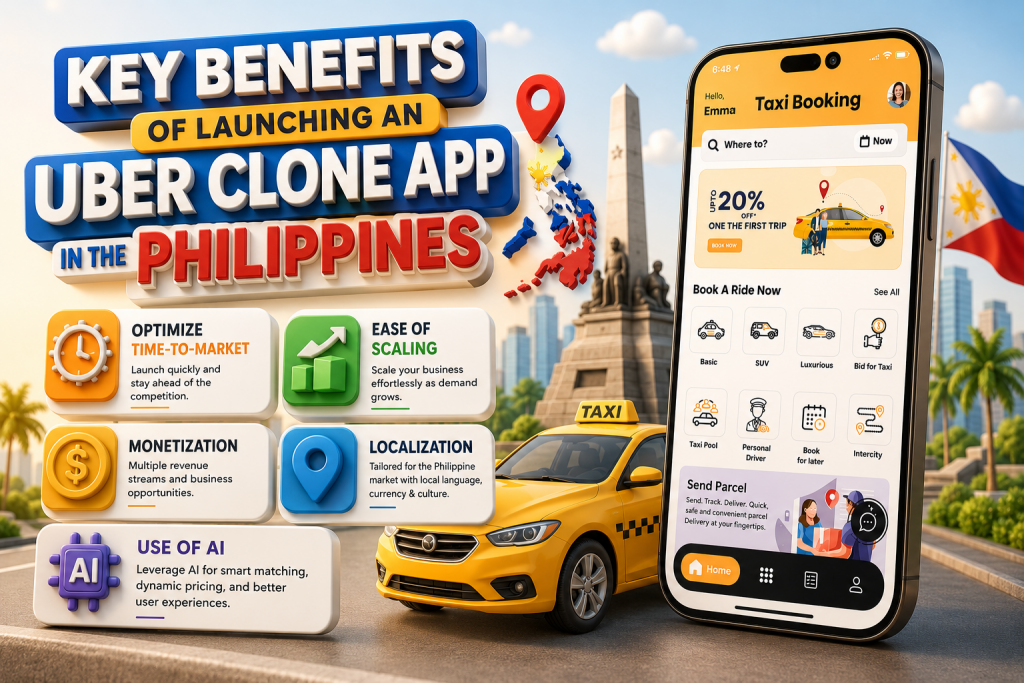
- Optimize Time-To-Market: TTM is crucial to success, hence opt for a solution that takes the least time. This would be developing a white-label Uber clone solution. This way, you are cutting Uber Clone app development time but not cutting corners. This type of solution is also a high-performing, feature-rich solution that can be ready to launch in 1-2 weeks.
- Ease of Scaling: Scalability is essential for ride-hailing platforms. This might take extra effort if you decide to custom-develop it. But, for a ready-made clone, this is provided by default.
- Monetization: Do not restrict yourself to a single monetization strategy of driver commission. There are several other methods available. This includes surge pricing, in-app advertising and many more.
- Localization: English is not the first language in Southeast Asia and the Philippines is no different. Ensure your app provides the option for users to use multiple languages and currencies, especially the regional ones.
- Use of AI: Consumers now cannot imagine any app that does not give them value-added features. Include AI-Powered features like demand prediction, fraud detection, dynamic routing and more.
Core Features for the Filipino Market
A taxi app built for the Philippines must go beyond generic ride-hailing. Filipino riders and drivers have distinct behavioral patterns that demand purpose-built functionality.
Here are the features one needs to take into consideration for greater Filipino market relevance:
- Cashless payments and Multi-Wallet integration.
- Multi-vehicle mode support like that for cars, motorcycles (habal-habal), and e-trikes.
- Offline booking buffer for areas with intermittent connectivity.
- Filipino language UI
- Surge pricing transparency.
- SOS / Safety features are a high priority for solo female riders in Metro Manila
- Driver earnings dashboard
- Real-Time traffic routing
Use Cases and Industry Applications
There is more to building a taxi app like Uber than you may have imagined. It opens the door to a versatile range of mobility and logistics verticals. The use cases and examples here provide a greater insight into this:
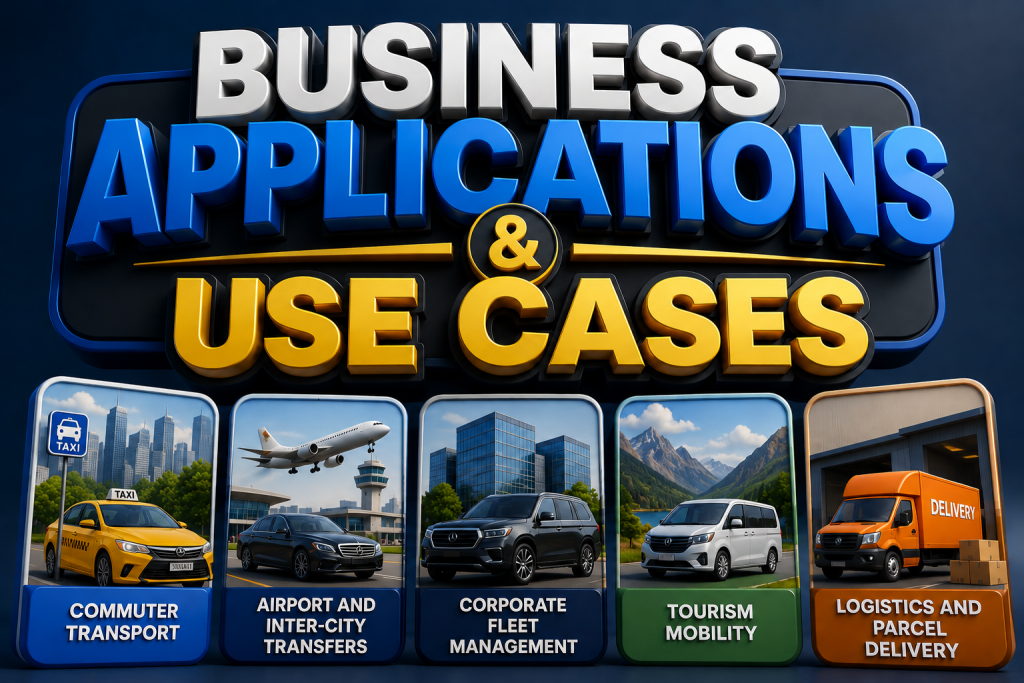
- Commuter transport: It fulfils the need for on-demand point-to-point transport to beat the chronic traffic congestion.
- Airport and inter-city transfers: The NAIA and Clark airport corridors represent premium, high-margin ride segments for business executives and corporates that prefer using mobile apps.
- Corporate fleet management: Employee transportation is increasingly being outsourced, thus increasing the opportunities.
- Tourism mobility: Tourists prefer a more organized method of transport, and with increasing tourist activity, the requirements are also rising.
- Logistics and parcel delivery: An established network is ideal for several other logistical solutions like last-mile delivery, on-demand grocery or document delivery.
Competitive Advantages in the Philippine Market
Many founders are intimidated by Grab’s market dominance. This fear is a strategic miscalculation. Grab’s scale is simultaneously its strength and its vulnerability.
Hyper-local specialization beats generalization. Grab’s super-app structure means it optimizes for average outcomes across six countries. A Philippines-first platform can offer deeper local integration, neighborhood-level surge logic, Filipino customer support, and partnerships with local telcos that a regional giant structurally cannot.
Driver dissatisfaction is a real opportunity. InDrive’s explosive 8x growth in 2025 was driven primarily by a lower commission model. Drivers are the supply-side infrastructure of every ride-hailing platform. A founder who treats drivers as partners rather than contractors will attract the supply side at scale, and supply determines market viability.
Rather than competing head-to-head for Metro Manila commuters, a new entrant can own Davao’s corporate transport market, Cebu’s tourism corridor, or Iloilo’s first organized ride-hailing platform and build outward from an uncontested beachhead.
An Uber Clone Script for the Philippines can do all this and more. While giants like Grab dominate the headlines, the “niche-down” strategy is proving highly effective in 2026. Localized apps can win by implementing lower commission rates and building community trust.
The Roadmap to Deployment
There is an immense opportunity for founders to take advantage of, hence the obvious question here is how to launch a ride-hailing app in the Philippines.
The ideal solution would be a white-label Uber Clone app for the Philippines. This can drastically boost your chances and put the odds in your favor.
V3Cube is one firm that provides on-demand white-label products globally. They are a globally recognized B2B SaaS and enterprise technology provider specializing in ready-made, white-label app solutions.
‘TaxiCube’ is their flagship Uber clone taxi app solution, which is purpose-built for founders who want enterprise-grade functionality without the burden of ground-up development. They have a feature-rich solution with all basic features and more.
Launch your ride-hailing platform in the Philippines! Order the Uber Clone App from V3Cube to customize and launch within 2 weeks.
FAQs
1. What is an Uber clone taxi app?
The Uber clone taxi app is a taxi business software that models the existing taxi solution by the popular firm Uber. One has the option to either buy a white-label Uber Clone or custom-build an Uber clone app.
2. How long does it take to launch an Uber-like taxi app in the Philippines?
Businesses can launch an Uber-like taxi app with 1-2 weeks if they opt for a white-label solution. On the other hand, if they choose to custom-build it, it can take up to 18 months.
3. How much does it cost to develop a taxi app like Uber for the Philippine market?
The cost to develop a taxi app ranges between USD 50,000 – 200,000+ for a custom-developed one. While if you choose to buy a white-label one, it will cost a fraction of the amount.
4. Which cities in the Philippines offer the best opportunity for a new ride-hailing app?
There are several cities in the Philippines that are underserved by taxi apps like Iloilo, Bacolod, Baguio, Cagayan de Oro, and Butuan.

Chirag Darji is the CEO of V3Cube, specializing in building on-demand mobile apps and providing mobility solutions for companies around the world. With extensive experience in strategic planning and innovation, he helps entrepreneurs worldwide launch, scale up, and grow successful digital businesses.